















Words By Jason Hortillas

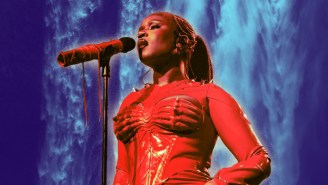
Before I even heard Erykah Badu’s latest album New Amerykah Part One: New World War (Universal/Motown), feedback from hearsay was so-so. “That new Badu is a little different,” would be the consensus from heads. So rather than take their word for it I took a go listen and without shock it surpassed my expectations.

First albums are like first impressions and Erykah Badu’s debut Baduism left a mark on listeners, believing this was the extent of her sound. Three albums later and the “different” label was branded on each effort post-Baduism/Erykah Badu Live. Different is right. But it’s not just “different” for the sake of it; rather it clearly shows her growth as an artist. New Amerykah was this example.

New Amerykah is a mix of revolutionary themes, eulogies to the dead, a funk homage and bass heavy, sonic rants of aggression. With some of the production seemingly suited for an emcee, this bravado even carries over to the slow tempo soul ballads. “New Amerykah,” although sung, could very well be categorized as simply a Hip-Hop album. For the sake of argument do you know another R&B album that consistently has outros of Hip-Hop beats and activist rant skits? You could have blinked for a second and thought this was a Pete Rock or a dead prez album.

9th Wonder most known for his work with Jay-Z and his former group Little Brother, lends his production on “Honey,” the most radio-friendly of the album. Ironically, the lead single is not listed on the album but is added as a bonus track instead. Legend and Hip-Hop sample icon Roy Ayers employs his signature sound of Funk and Jazz on “American Promise,” while Sa-Ra Creative Partners member Shafiq Husayn contributes to the project on multiple tracks. One of songs includes a Curtis Mayfield sample on “Master Teacher,” giving the fake out on an assumed “Kanye-ish” sounding joint. Not taking anything away from Husayn, but it sure sounded like Mr. West. As they say, imitation is the greatest form of flattery.

Badu pays tribute to the late J Dilla on numerous occasions as well. A short-lived Soulquarians reunion on “Telephone” includes members James Poyser, Ahmir “Questlove” Thompson, and Badu with inspiration for the song provided by a conversation she had with Maureen Yancey, Dilla’s mother. On “My People,” Jaylib (J Dilla & Madlib) co-producer Madlib takes a stab at his partner’s track in his rendition of the Eddie Kendricks original.

This may not be a Hip-Hop album but it sure has all the symptoms. Badu, the charmer of the likes of Andre Benjamin and Common, has also got us sprung but in the best way she knows how. And for that dude who doesn’t have an extensive collection of non-rap CDs, this is a great transition disc. Evidently, this is far from the atypical, adding to an already impressive catalog. With volume two on the way, one thing is for certain: expect something different from Ms. Badu.

4 CIGARETTES